

Your tongue does more than help you taste, chew, and speak; it can also serve as a surprisingly reliable window into your overall health. Unlike many internal organs, it’s directly visible, which means changes in its color, texture, and surface can offer early clues about what’s happening inside your body. Most people never think to examine it closely, yet a quick look in the mirror each morning takes less than a minute and can reveal early signs of dehydration, nutritional deficiencies, oral infections, or even systemic conditions before other symptoms have a chance to develop.
The challenge is knowing what you’re looking for. Without a clear picture of what a healthy tongue actually looks like, it’s difficult to recognize when something has shifted. Color, moisture, surface texture, and coating all matter, and all can change in meaningful ways. Developing a basic understanding of these markers gives you a simple but powerful baseline to work from, one that puts you in a much better position to catch changes early, ask the right questions at your next dental visit, and take action with confidence when something doesn’t look quite right.
What Are the Key Characteristics of a Healthy Tongue?
A healthy tongue has five core qualities that are easy to check in a mirror. Here’s what to look for:
- Pink Color: A healthy tongue is consistently pink (not too bright, not too pale). Slight variations in shade are normal, but the overall tone should be a uniform, soft pink.
- Moist Surface: The tongue should feel and appear moist. Dryness or a sticky texture can indicate dehydration or reduced saliva production.
- Visible Papillae: Tiny bumps called papillae cover the surface of the tongue. They give it a slightly textured look and house your taste buds. They should be small and relatively uniform.
- Minimal or No Coating: A very thin, white coating can be normal, especially in the morning. A thick or discolored coating is usually a sign that something needs attention.
- Smooth Edges, Symmetrical Shape: The edges of a healthy tongue are smooth and symmetrical. Irregular edges, lumps, or persistent sore spots warrant professional evaluation.
If any of these characteristics do not match your tongue, there could be a sign of a problem.
Does Tongue Appearance Change Throughout the Day?
Yes, tongue appearance naturally fluctuates. In the morning, your tongue may look more coated and slightly drier due to reduced saliva flow during sleep. After eating or drinking, the color and surface can temporarily shift.
These short-term changes are usually harmless. If you want the most accurate reading of your tongue health, check it before eating or brushing, ideally first thing in the morning in good natural light.
Is a Coated Tongue Normal or a Sign of a Problem?
A thin, white film on the tongue is considered normal and is largely caused by bacteria, dead cells, and food debris accumulating overnight. This usually clears with regular brushing and tongue cleaning.
A light coating that disappears after oral hygiene is rarely a cause for concern. A thick, persistent, or strangely colored coating, especially if accompanied by bad breath or discomfort, may indicate an underlying condition worth investigating.
Factors that commonly cause heavier tongue coating include poor oral hygiene, dry mouth, antibiotic use, smoking, and a diet high in processed foods.
What Does an Unhealthy Tongue Look Like?
An unhealthy tongue signals that something is off; whether that is a local issue in the mouth or a broader systemic imbalance. Changes can appear gradually or quite suddenly, and they usually fall into three categories: a shift in color, a change in surface texture, or an unusual coating that does not clear with normal dental hygiene.
Color changes are often the most noticeable. A tongue that was reliably pink and even may develop white patches, turn an unusual shade of red, or take on a yellowish or brownish film. Texture changes (new cracks, a smoother-than-usual surface, or elongated papillae) are subtler but equally meaningful. Coating changes, particularly a thick layer that persists after brushing, often point to bacterial imbalance, dehydration, or a digestive issue.
What Does a White, Yellow, or Brown Tongue Indicate?
Tongue discoloration is one of the more common reasons people take a closer look at their oral health; and for good reason. While a healthy tongue maintains a consistent pink hue, shifts toward white, yellow, or brown can point to everything from harmless lifestyle habits to conditions that deserve professional attention. Understanding what each color change signals is the first step toward addressing the root cause.
- White Tongue: Can be associated with oral thrush (a fungal infection), leukoplakia (thickened white patches), or simply a heavy coating from dry mouth or poor hygiene.
- Yellow Tongue: Often linked to bacterial overgrowth, tobacco use, or early signs of black hairy tongue. Rarely, it may be associated with jaundice or liver issues.
- Brown Tongue: Frequently related to heavy coffee, tea, or tobacco use. It may also be an early stage of black hairy tongue if papillae are elongated.
In most cases, white, yellow, and brown tongue discoloration is linked to correctable habits or temporary conditions, improved oral hygiene, better hydration, and cutting back on tobacco or coffee can make a visible difference within days to weeks. That said, if a discoloration persists beyond two to three weeks or is accompanied by pain, difficulty swallowing, or patches that won’t wipe away, it’s worth having a dentist take a closer look to rule out anything more serious.
What Does a Red or “Strawberry Tongue” Mean?
A bright red tongue (sometimes called a strawberry tongue) can indicate several things. It may be associated with vitamin B12 or folic acid deficiency, which causes the papillae to flatten and the surface to appear smooth and glossy red. This condition is also known as glossitis.
In children, a strawberry tongue is a recognized feature of Kawasaki disease and scarlet fever. In adults, it may also appear during certain infections or allergic reactions. Persistent redness should always be evaluated by a healthcare professional.
What Does a Black Hairy Tongue Mean?
Despite its alarming appearance, black hairy tongue is usually benign and temporary. It occurs when the papillae on the tongue become elongated and stained; typically due to antibiotic use, poor oral hygiene, heavy tobacco use, or excessive coffee and tea consumption.
Black hairy tongue nearly always resolves with improved oral hygiene, tongue cleaning, and addressing the underlying cause. However, it’s worth mentioning to your dentist if it persists beyond a couple of weeks.
What Do Cracks or Fissures in the Tongue Mean?
A fissured tongue, characterized by grooves or cracks across the surface, is actually a common, often inherited condition affecting up to 5% of the population. In most cases, it is completely harmless.
However, deep fissures can harbor bacteria and debris, potentially contributing to bad breath or mild irritation. Good tongue hygiene is especially important for people with a naturally fissured tongue. If cracks appear suddenly, are painful, or accompanied by swelling, a dental evaluation is recommended.
What Health Conditions Can Affect Tongue Appearance?
The tongue is often described as a “window to your health”, and for good reason. A range of systemic and local conditions can manifest as visible changes in tongue color or texture.
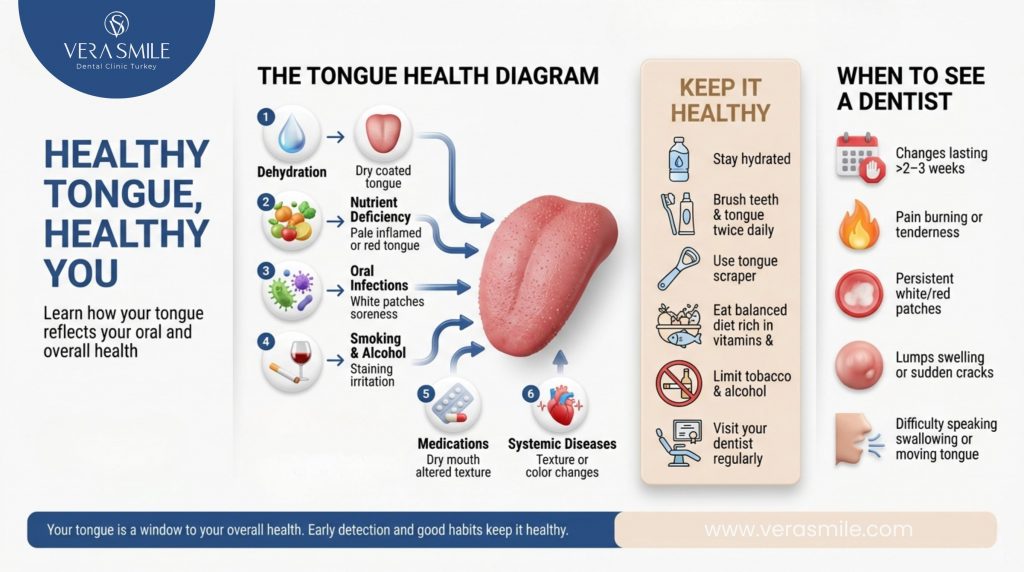
- Dehydration: A dry, pale, or slightly yellowish tongue can be one of the first visible signs that you’re not drinking enough fluids. The tongue loses its normal moisture and healthy color.
- Nutrient Deficiencies: Low levels of iron, B12, folate, or zinc can cause glossitis (inflamed, smooth tongue), pale coloration, or soreness. These changes are often reversible with dietary correction or supplementation.
- Oral Infections: Oral thrush (Candida overgrowth) produces white, cottage-cheese-like patches. Bacterial or viral infections may cause redness, ulcers, or textural changes.
- Smoking & Alcohol Use: Both habits significantly affect tongue health (staining the surface), drying out mucous membranes, and increasing the risk of leukoplakia and oral cancer.
- Medications: Antibiotics can disrupt oral flora and lead to fungal overgrowth. Some medications reduce saliva, contributing to dry mouth, coating, and increased susceptibility to infection.
- Systemic Conditions: Diabetes, autoimmune disorders, and thyroid imbalances can all affect tongue health, often changing moisture levels, healing capacity, or risk of oral infections.
What makes the tongue such a valuable diagnostic clue is precisely this breadth; a single organ can reflect conditions as varied as a skipped glass of water, a vitamin deficiency, or the early stages of a systemic disease. Most of these changes are gradual, which is why regular self-checks matter. Catching a shift early gives you and your dentist far more options to work with. If you notice something that doesn’t have an obvious cause or lingers beyond two to three weeks, don’t dismiss it, your tongue may be telling you something worth listening to.
How Do Nutrient Deficiencies and Dehydration Change Your Tongue?
Iron deficiency anemia commonly causes a pale, smooth, and sometimes sore tongue. Vitamin B12 and folate deficiencies can produce a similar effect; the tongue may become inflamed, lose its texture, and feel tender or burning.
Dehydration, even mild, reduces saliva production and can make the tongue feel tacky, look slightly shrunken, or develop a white-ish film. Increasing daily water intake and eating a nutrient-rich diet are the first steps to improvement.
Can Oral Infections Change Tongue Color or Texture?
Yes, significantly. Oral thrush, caused by an overgrowth of Candida yeast, is one of the most common culprits, producing thick white patches that may be difficult to wipe off. Unlike a normal coating, thrush patches can cause soreness or a burning sensation.
Viral conditions such as geographic tongue (benign migratory glossitis) create irregular, map-like patches that shift over time. While not infectious, they can be sensitive to certain foods.
Does Smoking or Alcohol Impact Tongue Health?
Both smoking and heavy alcohol use can have significant and cumulative effects on tongue health. Smoking stains the tongue and papillae, reduces blood flow to oral tissues, and is strongly associated with leukoplakia, a condition that may carry a risk of becoming cancerous if left unmonitored.
Alcohol dries out the oral mucosa, alters the balance of oral bacteria, and can contribute to tongue irritation and discoloration. Reducing or eliminating these habits is one of the most impactful steps you can take for long-term tongue and oral health.
Are Tongue Changes Temporary or Permanent?
Most tongue changes are temporary and resolve once the underlying cause is addressed. Changes linked to diet, dehydration, or medication side effects often improve within days to a couple of weeks. However, some conditions, such as geographic tongue or fissured tongue, may be lifelong, though typically harmless.
How Long Do Tongue Changes Usually Last?
The duration of tongue changes depends almost entirely on their underlying cause. A morning coating is the most fleeting, clearing within minutes to hours after brushing and drinking fluids. Dryness caused by dehydration improves just as quickly once fluid intake increases. Changes linked to antibiotic use resolve within one to two weeks of finishing the course, and oral thrush generally clears in the same timeframe with appropriate antifungal treatment. Nutrient deficiencies take considerably longer; color and texture changes tied to low iron, B12, or folate may take several weeks to months to fully reverse with supplementation or dietary changes. Leukoplakia and other persistent lesions are in a category of their own: they do not resolve without professional evaluation and treatment, which is precisely why any tongue change lasting beyond two to three weeks should be assessed by a dentist or physician.
Any tongue change that persists beyond two to three weeks, especially without an obvious cause, should be evaluated by a dentist or physician. Early detection is key for any serious underlying condition.
How Can You Improve the Health and Appearance of Your Tongue?
The good news is that most tongue health issues respond well to simple, consistent oral hygiene habits and lifestyle adjustments.
- Stay hydrated
- Brush twice daily
- Use a tongue scraper
- Eat a balanced diet
- Limit tobacco and alcohol
- Visit your dentist regularly
Taking care of your tongue doesn’t require a complicated routine; small, consistent habits practiced daily add up to a meaningful difference over time. Most people who address the basics see noticeable improvements in coating, color, and freshness within just a few weeks. Think of it less as a separate task and more as a natural extension of the oral hygiene routine you already have.
Is Tongue Scraping Necessary and How Often Should You Do It?
Tongue scraping is one of the most effective ways to remove the bacterial coating, food debris, and dead cells that accumulate on the tongue surface, particularly at the back, which a toothbrush often misses.
For most people, tongue scraping once daily, ideally in the morning before eating or drinking, is sufficient. Those prone to heavy coating may benefit from scraping twice a day.
What Are the Best Tools and Techniques for Tongue Cleaning?
When it comes to tongue cleaning, not all tools deliver the same results. The method you choose makes a real difference in how effectively you remove the bacterial coating and debris that accumulate on the surface; particularly toward the back of the tongue, where buildup tends to be heaviest and a standard toothbrush often falls short.
- Tongue Scraper (Primary Recommendation): A U-shaped metal or plastic scraper glides across the tongue surface to lift and remove coating in a single pass. It reaches further back and is significantly more effective than brushing alone.
- Soft-Bristled Toothbrush: A reasonable alternative if you don’t have a scraper. Use gentle circular motions from back to front. Effective for light coating, though less thorough than a dedicated scraper.
- Antibacterial Mouthwash: Best used as a complement to scraping, not a replacement. Mouthwash helps reduce bacterial load and freshens breath but does not physically remove tongue coating.
For best results, combine a tongue scraper with an antibacterial mouthwash as part of your daily routine. The scraper does the heavy lifting by physically removing the coating, while the mouthwash tackles residual bacteria and leaves your mouth feeling fresh. Together, they offer a level of cleanliness that neither achieves as effectively on its own.
How Can You Monitor Your Tongue Health at Home?
You don’t need a clinical setting or special equipment to keep a meaningful eye on your tongue health. In fact, one of the most effective things you can do is also one of the simplest: a brief, consistent self-check each morning before eating or brushing. Most people skip this entirely, not out of laziness, but because they’ve never been shown what to look for or told that it matters. The truth is that your tongue can change gradually over days or weeks, and those slow shifts are easy to miss without a habit of regular observation. A daily check takes less than 60 seconds, requires nothing more than good lighting and a mirror, and gives you an invaluable early-warning system, one that puts you in a far better position to catch potential issues before they develop into something that requires more involved treatment.
What Is a Simple Daily Tongue Check Routine?
A useful self-check doesn’t have to be complicated, it just needs to be consistent. The routine below walks you through six straightforward steps that cover everything worth observing, from surface color and coating to the often-overlooked underside of the tongue. Done in the same order each morning, it becomes second nature within a week or two, and far more informative over time than an occasional glance would ever be.
- Good lighting: Stand near a window or use your phone torch for natural, bright light.
- Stick out your tongue: Fully extend it and observe the top surface, edges, and as far back as comfortable.
- Check the color: Look for consistency, healthy is pink. Note any patches of white, red, brown, or yellow.
- Assess the texture: Is the surface evenly textured? Look for new bumps, cracks, or smooth glossy patches.
- Note any coating: A light film is normal. Thick, patchy, or colored coating warrants attention.
- Check the underside: Lift your tongue and look at the underside and the floor of your mouth. Note any unusual lumps or color changes.
Taking a photo monthly in consistent lighting is a useful habit, comparing over time is far more informative than a single observation, especially for slow-changing conditions.
When Should You Be Concerned and See a Dentist?
While most tongue changes are benign and self-resolving, certain signs warrant prompt professional attention:
- Any color change or patch that persists for more than two to three weeks
- White or red patches that cannot be wiped away
- Unexplained pain, burning, or tenderness on the tongue
- Sudden or dramatic changes in tongue texture
- A lump, thickening, or raised area that doesn’t resolve
- Difficulty swallowing, speaking, or moving the tongue
- Tongue changes alongside other symptoms like fever, fatigue, or swollen lymph nodes
“Persistent changes in tongue color, texture, or discomfort should always be evaluated by a dental professional, as they can be early indicators of underlying oral or systemic conditions. Don’t wait, the earlier a concern is assessed, the better the outcome in virtually every case.” -Dt. Mümin Manassra
At Vera Smile, our dentists are experienced in identifying early oral changes that might otherwise be overlooked. A routine check-up is the safest and most effective way to stay on top of your tongue health, and your overall oral wellbeing.